
I. Overview of Dispensing Machines
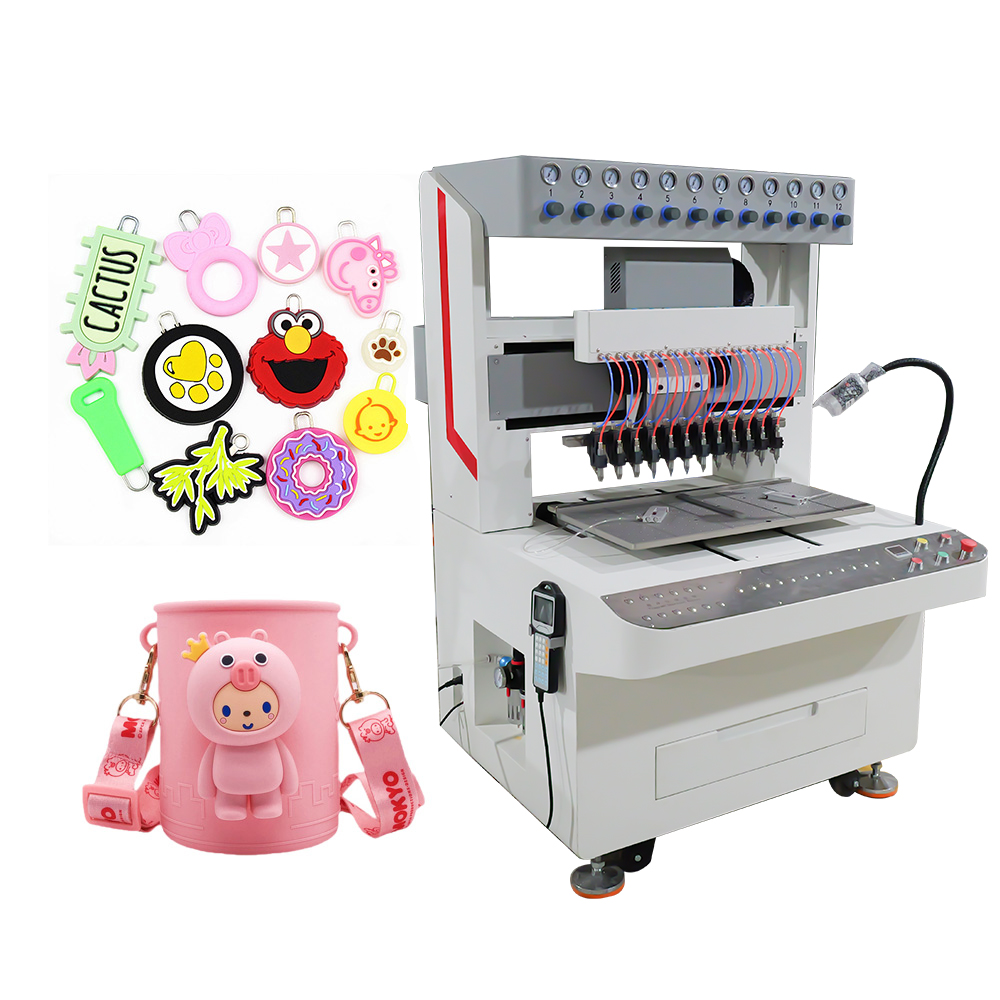
Dispensing machines, including specialized types such as the pvc label machine, pvc badge machine, and pvc patch machine, are crucial equipment in the manufacturing industry. They transform liquid materials into products with rich colors and three-dimensional effects through specific processes. Widely applied in various fields, ranging from jewelry to industrial components, these machines have become key to enhancing product quality and production efficiency for numerous manufacturing enterprises, thanks to their high precision and automation features.
II. Production Process Analysis
Raw Material Preparation: The primary raw material is usually PVC paste resin, which is dissolved in esters like DOP and mixed with color pastes to form a variety of colorful paste resin mixtures. For instance, when manufacturing colorful PVC labels using a pvc label machine, different color pastes can be blended to achieve diverse color effects.
Precise Dispensing: Relying on numerical control processing technology and a three - dimensional motion system, the dispensing machine accurately positions the PVC paste dispensing needle at the designated location of the mold. By controlling the extrusion time and the movement speed of the needle, it precisely distributes each drop of material. When making delicate electronic component markings, this precise control ensures clear and accurate patterns.
Curing and Molding: After dispensing, the mold is heated to above 170°C, triggering a chemical reaction between the PVC paste resin and esters. The liquid material then solidifies into the final product. For example, when using a pvc patch machine to produce anti - slip pads, the solidified material exhibits excellent wear - resistance and anti - slip properties.

III. Outstanding Advantages of the Equipment
High Precision: Equipped with precision nozzles and a numerical control system, dispensing machines can achieve a dispensing volume control accuracy of up to 0.01 grams, enabling the production of complex patterns and tiny characters. A well - known mobile phone brand used a dispensing machine in the production of its key characters, achieving precise molding of fonts smaller than 0.5mm. The edges of the characters are clear and burr - free, significantly enhancing the product's texture. This high - precision feature is also highly applicable in the operation of pvc badge machines, ensuring that badges have detailed and sharp patterns.
Strong Customization Ability: These machines support multi - layer dispensing or the stacking of different materials, allowing for the creation of three - dimensional decorative effects such as raised textures and gradient colors to meet diverse design requirements. A handicraft manufacturing enterprise combined metal materials with transparent resin through a dispensing machine to create artistic ornaments with unique light and shadow effects, which were well - received in the market.
This customization advantage is also a key feature of pvc label machines, pvc badge machines, and pvc patch machines, enabling the production of personalized products.
Efficient Production: With a multi - needle workstation design, a single machine can produce tens of thousands of pieces per day, greatly shortening the delivery cycle. A shoe label production factory introduced a dispensing machine and found that it could complete the same amount of work as 10 workers in the same time, with a three - fold increase in production. Whether it is for producing PVC labels, badges, or patches, this high - efficiency production capacity is a significant advantage of these machines.
Intelligent Operation: Dispensing machines can automatically identify the position of workpieces, reduce manual intervention, and support quick mold changes, making them suitable for small - batch customized orders. A small cultural and creative enterprise utilized the intelligent functions of a dispensing machine. When receiving orders for personalized badges, it could quickly change the mold and complete the entire process from design to production within 24 hours. This intelligent operation is also an important characteristic of pvc badge machines and other related equipment, improving production flexibility.
IV. Applications in the Industrial Field
Automotive Manufacturing
Dashboard Markings and Scales: They are aesthetically pleasing, clear, and resistant to wear and oil stains. A certain car brand used the dispensing process to produce dashboard scales. Even under long - term exposure to high temperatures and strong light, the scales remained clearly visible, enhancing driving safety. A pvc label machine can also be used in automotive manufacturing to produce labels for various components, providing important identification information.
Interior Buttons and Switches: Anti - slip textures are added to improve the operating feel and safety. A luxury car manufacturer applied the dispensing anti - slip process to the interior buttons of its high - end models, and users reported a significant improvement in the operating experience, with a more comfortable button feel.
Door Interior Trim Strips: They are given a unique texture and color, enhancing the interior aesthetics of the vehicle. A new energy vehicle enterprise achieved a gradient color effect on the door interior trim strips through the dispensing process, adding a sense of technology and fashion to the interior space.
Machining
Equipment Identification Nameplates: They mark equipment information, are corrosion - resistant and wear - resistant, ensuring that text and patterns do not fade or fall off over a long period. A heavy machinery manufacturing company used the dispensing process to produce equipment nameplates. After 5 years of use in harsh outdoor environments, the information on the nameplates remained clearly legible. A pvc label machine can play an important role in producing these durable nameplates.
Precision Mechanical Components: For components such as handles and knobs, anti - slip structures or buffer layers are added through dispensing to optimize the user experience and extend the service life. A machine tool production enterprise applied the dispensing process to its equipment handles, not only improving the comfort of workers when gripping but also reducing operational errors caused by hand slippage.
Electronics and Electrical Appliances
Circuit Board Protection: Polymer materials are applied to areas requiring insulation, moisture - proofing, and shock - proofing to protect circuit components. An electronic equipment manufacturer used the dispensing process to protect the circuit boards of its smart meters, reducing the failure rate in humid environments by 70%.
Electrical Enclosure Protection: Sealing layers are formed at interfaces and button gaps to prevent the intrusion of dust and moisture, improving the product's protection level. A well - known home appliance brand applied the dispensing sealing process to the control panels of its washing machines, enabling the products to reach an IP65 protection level and effectively extending their service life.
Remote Control Buttons: Characters and markings are made clear and wear - resistant, remaining legible after long - term use. A television remote control production enterprise used the dispensing process to produce button characters. After 100,000 press tests, the characters remained clear and intact.
Aerospace
Control Panel Markings: They remain clearly legible in extreme environments. The control panel markings of a certain aircraft model were produced using the dispensing process and remained clear within a temperature range of - 50°C to 120°C, ensuring the accuracy of flight operations.
Component Protection: High - strength, high - temperature - resistant materials are applied to enhance the performance and reliability of components. Small components of a certain aerospace device were covered with special materials through the dispensing process, significantly improving their stability in high - radiation environments and ensuring the successful completion of aerospace missions.
V. Future Development Trends
Dispensing machines, including pvc label machines, pvc badge machines, and pvc patch machines, will develop towards greater intelligence and automation, further improving production efficiency and product quality. At the same time, new energy - saving and environmental - friendly technologies and materials will be actively explored to achieve sustainable development. For example, the research and development of degradable dispensing materials will reduce the impact on the environment, and the development of more intelligent control systems will enable fully automated monitoring and adjustment of the production process.