
Monochrome Silicone Heat Transfer Labels: The New Trend Replacing DTF Printing
In today’s rapidly evolving garment printing industry, both consumers and brands demand higher standards. Beyond appearance and design, durability, comfort, and sustainability are becoming critical factors. Against this backdrop, monochrome silicone heat transfer labels are steadily replacing traditional DTF (Direct to Film) printing, emerging as the new favorite in apparel decoration.
Limitations of DTF Printing
DTF printing has gained popularity in recent years for its vibrant colors and flexible process. However, it has some significant drawbacks:
- Poor breathability: DTF creates a film layer that seals the fabric surface, leading to discomfort and heat buildup during sports activities.
- Lack of durability: After repeated washing, DTF prints tend to fade, crack, or peel off.
- Rigid hand feel: DTF designs often form a stiff coating on fabrics, reducing softness and comfort.
The Rise of Monochrome Silicone Heat Transfers
Compared with DTF, monochrome silicone heat transfer labels offer clear advantages:
- Superior breathability: Silicone is naturally breathable, keeping garments comfortable during physical activity.
- Outstanding wash durability: When applied with a heat press machine for clothes, silicone transfers remain vibrant and intact even after hundreds of washes.
- Soft and flexible: Silicone labels bend and stretch with the fabric, maintaining comfort without cracking.
- Eco-friendly and safe: Made from non-toxic materials, silicone complies with global environmental standards.
Production Process of Silicone Transfers
The production of monochrome silicone transfers is precise and professional, ensuring premium quality and durability. The process includes:
- Mold design: Creating accurate molds for logos or graphics.
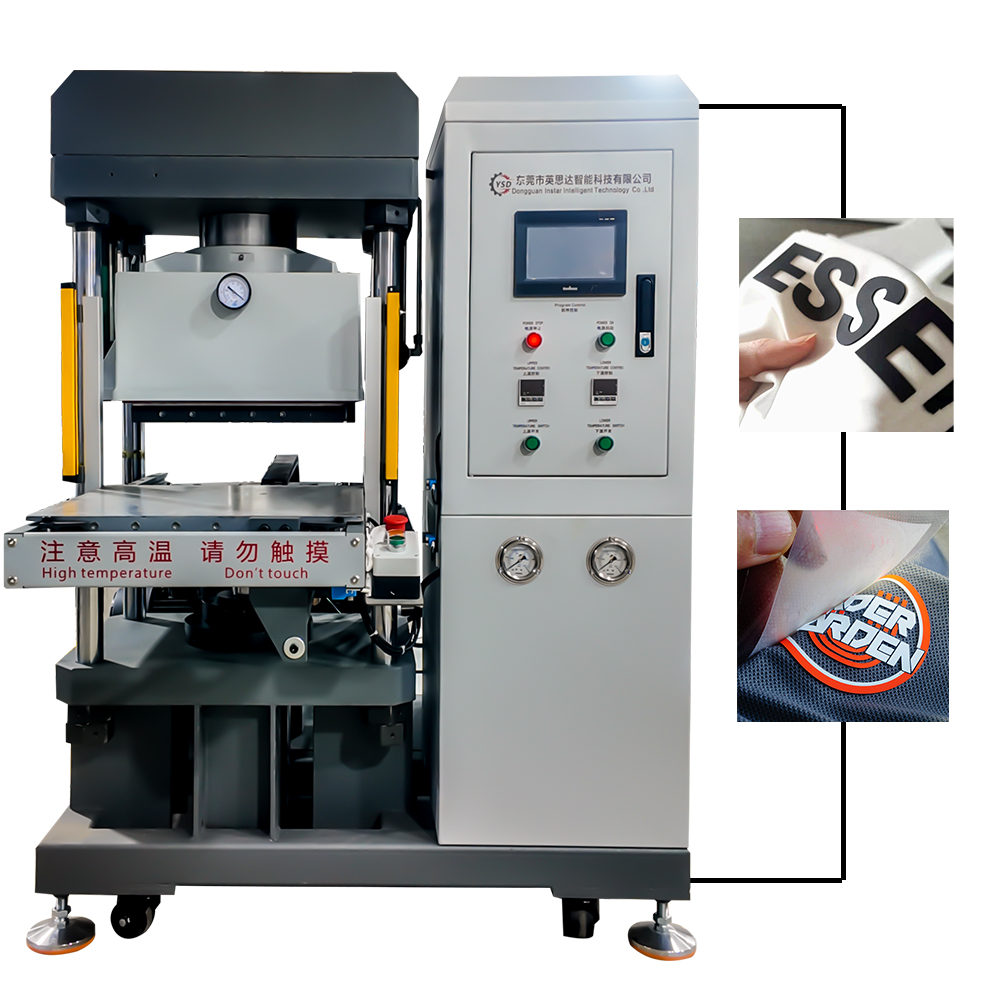
- Silicone shaping: Using a silicone badge making machine to inject liquid silicone and cure it into shape.
- Surface finishing: Polishing and refining details for a smooth finish.
- Heat transfer: Applying the design to fabric with a heat press machine for clothes under high temperature and pressure.
- Testing & packaging: Performing wash, abrasion, and adhesion tests to guarantee quality.
Wide Range of Applications
Silicone transfers are used across diverse industries:
- Sportswear: Breathable, flexible, and washable—ideal for activewear logos.
- T-shirts & casual wear: Adds a premium 3D effect to everyday apparel.
- Caps & footwear: Highly resistant to friction and wear.
- Bags & accessories: Enhances brand image and product quality.
In these applications, the silicone label machine is often used to produce silicone labels in bulk to meet market demand.
Preferred by Global Sports Brands
Major international sportswear brands such as Nike, Adidas, and Puma have increasingly adopted silicone heat transfers over DTF. The reasons go beyond functionality—silicone transfers offer a premium look, improved durability, and align with sustainability values that these brands promote.
Market Trends and Future Outlook
As consumers continue to demand higher quality and comfort, silicone heat transfer labels are poised for strong growth. The future will likely see expansion in:
- High-performance sportswear: Where comfort and functionality are key.
- Fashion and lifestyle apparel: Silicone’s 3D texture enhances modern designs.
- Sustainability-driven markets: Stricter environmental standards will accelerate the shift from traditional prints to silicone solutions.
Conclusion
From breathability and wash resistance to softness and eco-friendliness, monochrome silicone heat transfer labels outperform DTF printing in every aspect. With the aid of heat press machine for clothes, silicone badge making machine, and silicone label machine, silicone transfers can be mass-produced to meet global demand. As the apparel industry continues to evolve, silicone heat transfer labels are set to become the mainstream garment decoration technology of the future.